What The Hell Happened This Week?
Oil Broke $100. Then the Cost of Money Moved.
The week’s real story wasn’t crude itself. It was how an energy shock became an inflation, central-bank and bond-market problem.
Loading…
The newest explanations, most recent first.
Looking for something older? Explore the full archive →
The week’s real story wasn’t crude itself. It was how an energy shock became an inflation, central-bank and bond-market problem.
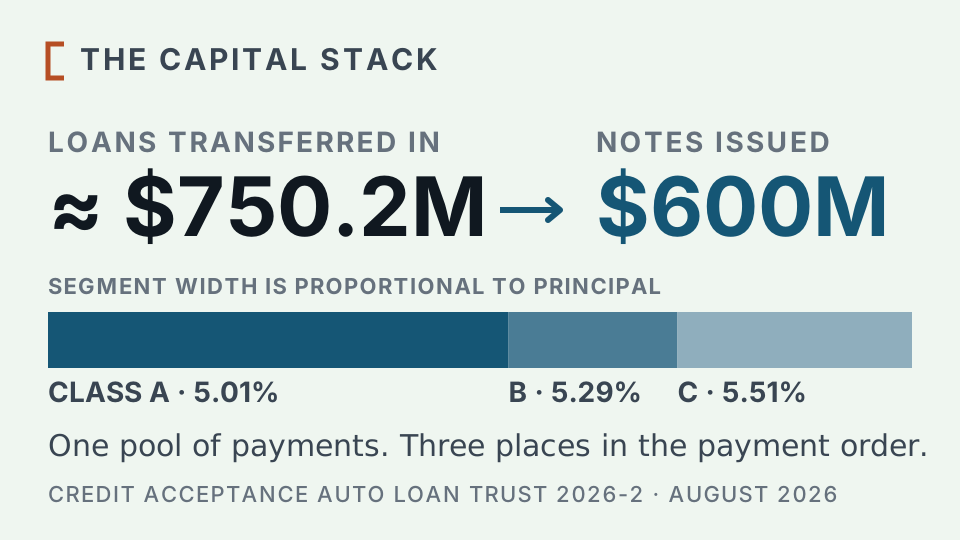
Securitization is not a magic trick that turns risky loans into safe bonds. It is a legal and cash-flow machine that moves assets into a financing vehicle, raises money from investors and turns one stream of payments into claims with different priorities.
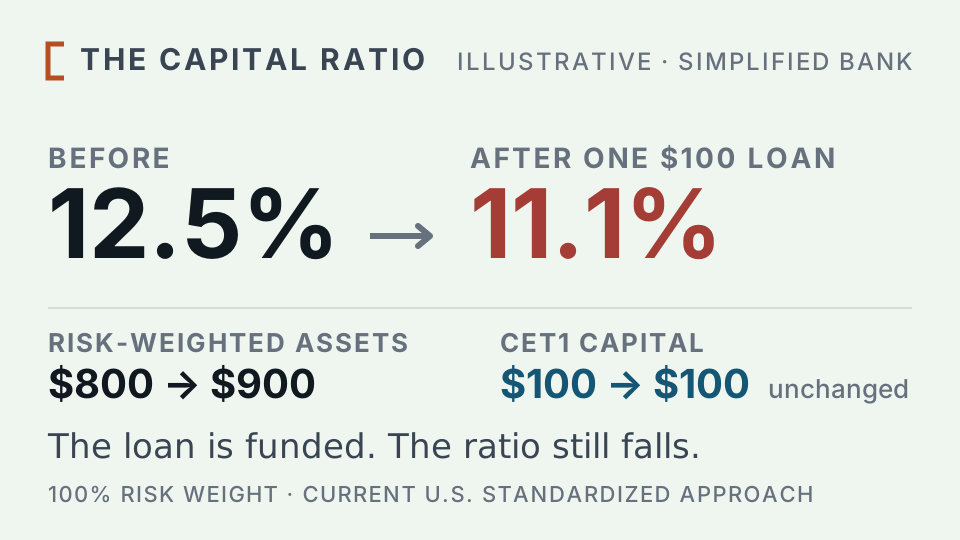
A bank can have deposits, cash and willing borrowers and still decide it cannot — or should not — make the next loan. The reason is that funding the loan and having enough capital to support the enlarged balance sheet are two different things.
The answer is not one lender and not one balance sheet. Hyperscaler cash, bond investors, infrastructure funds, private lenders, customers and even chip suppliers are financing different layers of the buildout — and each layer leaves the risk somewhere different.
Private credit is often described as lending outside the banking system. But the money still has to come from somewhere. Pensions, insurers, wealth investors and other capital providers fund the vehicles that make the loans — sometimes alongside borrowed money of their own. Understanding that machinery explains not only where private credit gets its capital, but how it fits alongside banks and bond markets in financing companies.
A company can decide that it wants to borrow. It cannot simply decide what that borrowing will cost. Between the financing decision and the cash hitting the company's account sits a machine of banks, investors, price discovery, allocations and settlement.

A big corporate loan may have one borrower and one credit agreement, but that does not mean one bank is doing the lending. The arranger can commit the financing, distribute pieces to different lenders and administer the loan after closing — while the ultimate credit risk ends up spread across a syndicate.
When a company refinances, the maturity is only one thing that resets. The cost of the debt, the creditor protections, the cash flows — and sometimes the balance of power in the capital structure — can change too.