How Money Actually Works
Loading…
Chip stocks lost more than $1.6 trillion over six sessions, and the broad market barely flinched. The real change was in lending: investors priced AI builders' debt according to whose cash actually repays it.
The week
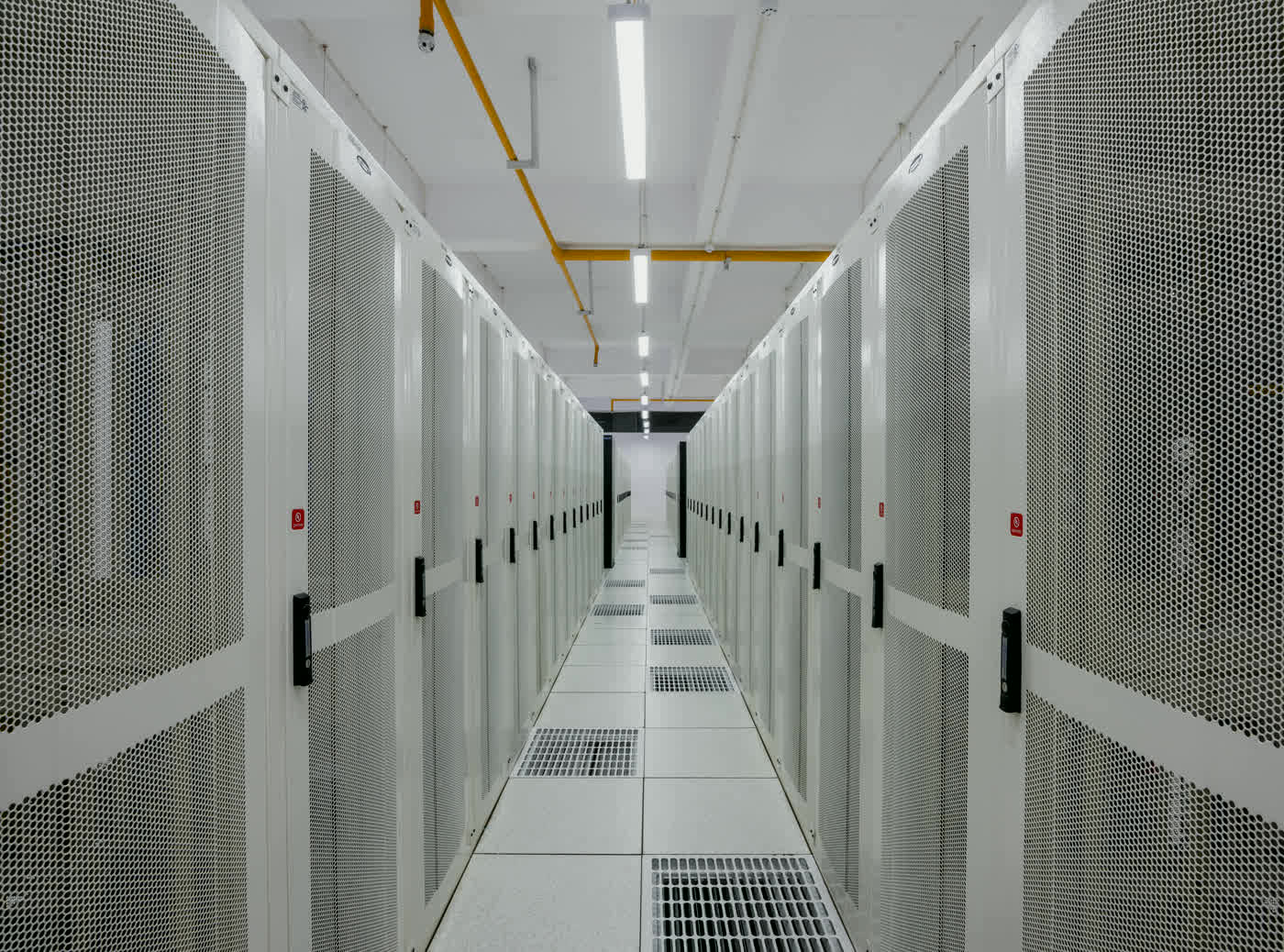
Same AI boom. Different borrowers.The market priced who actually repays.
If you only caught the headlines this week, AI had a rough few days. U.S.-listed chip stocks lost more than $1.6 trillion in six trading sessions through Wednesday, according to Reuters, and Asia's memory-chip giants fell hard on Thursday.
Zoom out, though, and the picture gets strange. The S&P 500 finished Thursday less than 1% below the record it set on October 6. And the 10-year Treasury yield, the closest thing finance has to a safe rate, went down, not up.
So money got cheaper, the broad market shrugged, and yet lenders demanded a lot more from some AI companies. How does all of that happen in the same week?
Because the market didn't treat AI as one trade. It graded AI's borrowers harder, and it graded them on one question: when this company borrows, whose money actually pays the lender back?
Inflation ran hot and a Fed-hike scare came and mostly went, but the bigger change was in credit: as safe Treasuries rallied, the risk charge on AI debt rose a little for the cash-rich giants and a great deal for the most leveraged builders.
Think of a company's bond yield in two parts. There's the safe rate, what an investor could earn by simply buying U.S. Treasuries. Then there's a risk charge on top, mostly for the chance the company doesn't pay, partly for how easily the bond can be sold. Markets call that charge the spread.
This week the two parts moved in opposite directions. The safe rate fell as investors bought long-term Treasuries; Reuters reported that worries about debt-fuelled AI spending were pushing money out of stocks and into government bonds. For most investment-grade companies, borrowing got slightly cheaper: their average all-in bond yield edged down between last Friday and Wednesday, according to ICE BofA data.
For the most leveraged AI builders, the risk charge rose faster than the safe rate fell.
You can see it most clearly in credit default swaps, or CDS, which work like insurance against a company defaulting. Traders quote their price as a yearly rate on the standard five-year contract. Here's roughly what those quotes, as of Thursday unless noted, work out to on $10 million of debt:
The Week Map
Safe money got cheaper. AI's riskiest borrowers were charged more.
Approximate quoted yearly cost of insuring $10 million of debt against default, five-year contract, as of Thursday unless noted. Over the same week the 10-year Treasury yield fell from 5.24% to 5.10%.
Same week, same safe rate. Very different charges for risk.
Those are price quotes, not literal bills: at a level as stressed as CoreWeave's, much of the cost is paid upfront. Nvidia's and Meta's quotes hit records too, according to Reuters, but from a low base. What matters is the gap between the bottom of that list and the top.
Picture two contractors asking the same bank for a loan. One has years of profits in the bank. The other has a thick folder of signed contracts from clients, some of whom are still raising money themselves. The bank will lend to both. It won't charge them the same.
Meta and Nvidia are the first contractor: lenders are relying on cash those businesses already earn.
CoreWeave is closer to the second. It borrows to buy chips and build data centers, then rents out the computing power under multiyear contracts. At the end of June it had about $35 billion of debt and about $104 billion of contracted backlog.
That backlog is real. Deutsche Bank, which rates the stock a buy, estimates about two-thirds of it is with investment-grade customers, and chief executive Mike Intrator told staff this week that it more than supports the company's debt, according to Reuters. But debt has a due date. A backlog depends on customers paying for years.
The bond market is pricing that gap. CoreWeave first sold its 9.75% notes due 2031 at face value in April. This week they traded around 80 cents on the dollar, yielding roughly 15% to 16%, while a five-year Treasury paid about 5%. Most of that difference is the charge for risk, and a rough guide to what bond investors would want before lending CoreWeave new money. Its shares fell 15% on Wednesday and won back 6% on Thursday.
Not every CoreWeave lender stands in the same place, though. Much of its borrowing sits in separate loan facilities that finance the chips for specific customer contracts. The bonds and default insurance in this story price the company's broader credit.
Oracle sits in between. When S&P cut it to BBB-, the lowest investment-grade rating, in July, the agency pointed to AI-driven borrowing, negative free cash flow and heavy reliance on OpenAI for its contracted backlog. Oracle's stock fell nearly 9% on Wednesday and recovered 3% on Thursday.
As Evercore ISI's trading desk put it, according to CNBC, the market was saying "no mas" to AI debt without operating cash flow behind it.
It's tempting to read the chip selloff as a sign that AI demand is collapsing. Thursday's best evidence says chip demand, at least, is not. TSMC, the world's largest contract chipmaker and a major supplier to Nvidia, reported record quarterly profit, up 68.7% from a year earlier.
What a record quarter can't prove is that every AI customer will earn enough on all that capacity to keep paying for it. That is the question lenders are pricing. A chipmaker's future sales depend partly on its customers being able to keep raising money, and some of those customers are the same leveraged builders the credit market just marked down.
None of this started on Monday. On October 7, the Wall Street Journal and the Financial Times reported a wave of planned chip financings: Broadcom seeking more than $50 billion for custom AI chips, SpaceX about $40 billion for Nvidia chips, and Oracle a structure with Apollo and Goldman Sachs. The next day, Bloomberg reported that AI-infrastructure borrowers had already priced nearly half a trillion dollars of new debt this year, and Oracle's and Broadcom's default insurance hit records. Every new deal draws on many of the same lenders. This week the market charged more for that risk, and not only at the company level: the Financial Times reported that bonds financing some large data-center projects had slipped below face value.
The week's other big story ran alongside this one. Consumer prices rose 0.6% in September, and core inflation, which strips out food and energy, came in at 2.6%, a touch above forecasts. Producer prices jumped 1.3% in a month; among goods, energy drove more than 80% of the increase. With Brent crude around $105 a barrel and attacks on shipping near the Strait of Hormuz continuing, energy did most of the pushing.
Markets flinched. On Wednesday the two-year Treasury yield, the part of the bond market most tied to the Fed, rose, and futures-implied odds of an October hike jumped from about 22% to roughly 50%. By Thursday they were back near 27%. After September's hike, holding steady on October 28 is still the likelier outcome. Homebuyers saw no relief either way: Freddie Mac's average 30-year mortgage rate held at 7.40%.
Did the inflation report cause the AI credit selloff? Some commentators said so, and higher-for-longer rates do make debt harder to carry. But the long-term yields that most corporate debt is priced against fell this week, Korean memory makers had already been hit by a Chinese rival's claimed technology breakthrough, CoreWeave's slide sped up after a chart of its bond yields was widely shared online late Tuesday, and the AI-debt repricing began the week before. The two stories met at the price of money. One didn't simply cause the other.
The $1.6 trillion is real money for people who own chip stocks. It isn't the broad market. Prices pointed to a rotation toward safety, not a collapse: from last Friday through Thursday the Nasdaq fell about 2.4%, the Dow rose about 1%, and demand for long-term Treasuries pushed the 30-year yield down from 5.60% to 5.43%.
Treat the insurance prices as approximate, too. Reuters noted that some single-company CDS contracts trade fewer than 10 times a day, so a few trades can move the price sharply. The signal carries weight because bonds, stocks and insurance all pointed the same way.
A backlog is a promise. Lenders price it by who made it, and by what stands behind it.
Borrow against your own profits and lenders have to trust one balance sheet. Borrow against contracts and they have to trust a chain: you, your customers, and whoever is funding your customers.
In AI, that chain can loop back on itself. This week the IMF counted 14 "circular" AI financing deals since 2023, where suppliers or investors also fund the customers who buy from them: about $650 billion of debt and $300 billion of equity, in exchange for $1.4 trillion of future revenue commitments.
That doesn't mean the chain will break. It means lenders are now pricing each link separately. Four weeks ago, we listed AI financing terms among three things to watch. This week, the price of that risk moved, and it moved borrower by borrower.
Whether the grading spreads. If insurance costs for the tech giants and the broad investment-grade market start climbing toward Oracle's and CoreWeave's, this becomes a much bigger story. So far they remain far lower, and investment-grade bond spreads barely moved through Wednesday.
What the pending deals cost. Broadcom's, SpaceX's and Oracle's financings were reported as talks. If they close, their rates will show what the grading costs in practice.
October 28. Futures put roughly one-in-four odds on another Fed hike. Whether energy keeps feeding inflation will help decide if the scare returns.
The next time a headline warns of "AI debt fears," ask:
The market didn't decide this week that AI is a bad bet. It decided that not every AI borrower is the same bet.
That is what the hell happened this week.
Market levels are Thursday, Oct. 15, 2026 closes or reported quotes. Default-insurance (credit default swap) levels are dealer and data-provider quotes reported by Reuters and Bloomberg; single-company contracts can trade thinly, so the levels are approximate, and at distressed levels much of their cost is paid upfront. Where an original report was not accessible, figures were confirmed through other published reports of it. Readings of what drove the week's moves are presented as interpretation, not as established cause.
Your turn
Was something unclear? Did we miss an important angle? Is there a question you’d like us to answer next?
We’d love to hear from you.
Share your thoughtsor write to hello@inlayterms.com
Spotted a factual error? Write to corrections@inlayterms.com.