
What The Hell Happened This Week?
Loading…
Last week, oil above $100 repriced the cost of money. This week, the Fed and Bank of Japan turned part of that repricing into policy, while OpenAI, Oracle-linked data-center debt and Nscale made the AI buildout's enormous capital requirements much harder to ignore.
The week
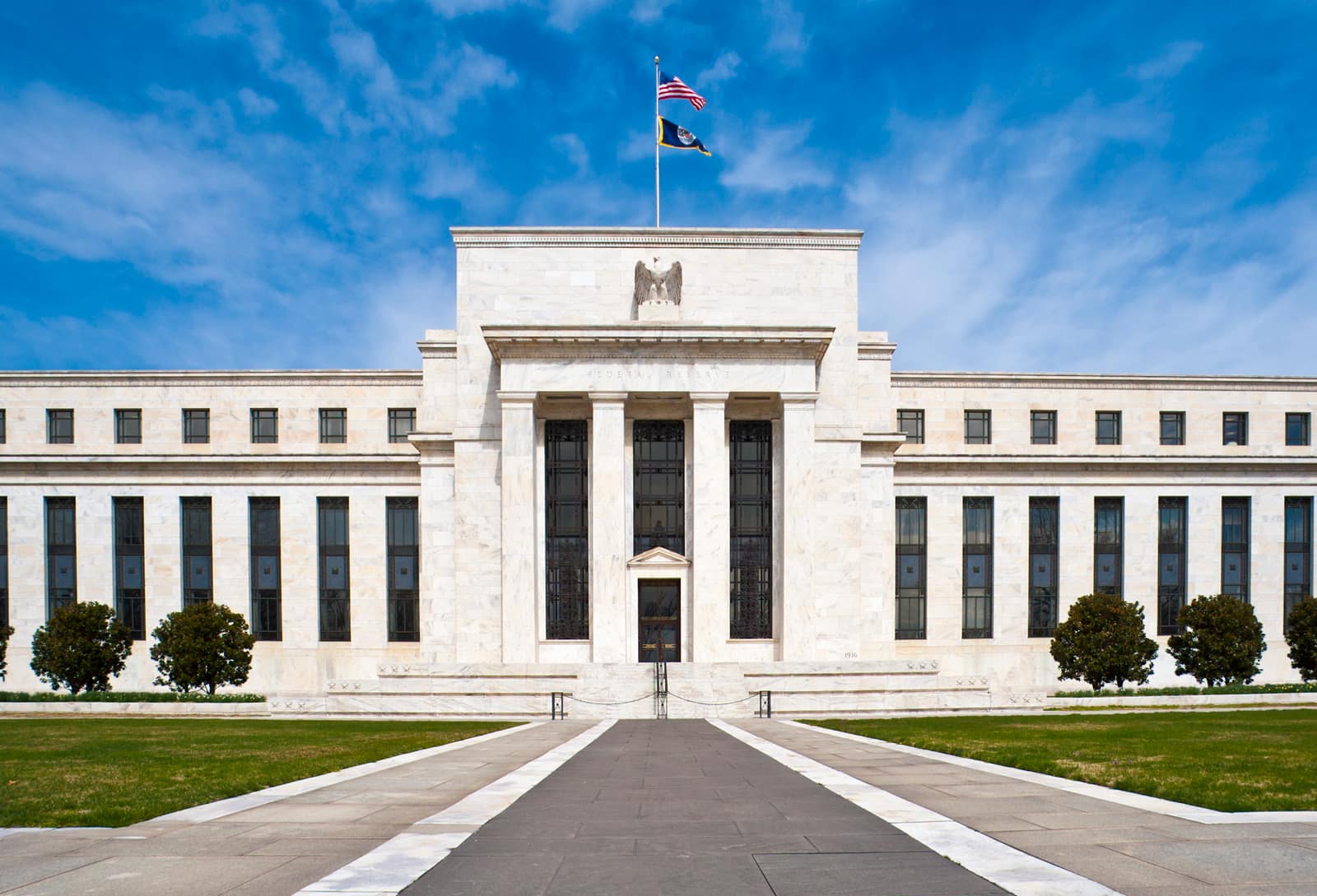
Expected tightening became actual policy.And the AI buildout's capital requirements became concrete.
Last Friday, the question was whether an oil shock would stay an oil story.
It did not.
By the end of that week, Brent had broken through $100, the 10-year Treasury was sitting just below 5%, and markets were assigning roughly an 85% probability to a Fed rate increase at the meeting ahead.
This week began from that new baseline.
On Monday, before the Fed had even met, the 10-year Treasury yield briefly traded above 5% intraday. It closed that day at 4.97%, then finished Tuesday at 5.00%.
On Wednesday, the Fed actually raised rates.
On Friday, the Bank of Japan did the same.
And by then, a second financial story had become harder to ignore: the AI buildout was producing increasingly concrete evidence of just how much capital it still needs.
These are not one causal chain.
The Fed did not cause OpenAI's projected cash burn. The Bank of Japan did not cause an Oracle-linked data-center loan to trade below par.
But the two stories meet at the same place:
Capital has a price. Risk has a price. And the balance sheets available to fund enormous projects are not unlimited.
The first change was simple: part of the tightening markets had spent the prior week pricing became real policy.
The Federal Reserve raised the federal-funds target range by a quarter percentage point to 3.75%–4.00%, in a unanimous 12–0 vote. It was the Fed's first rate increase since 2023.
The more important signal was the path beyond that single decision.
In the Fed's September projections, the median participant's estimate of the appropriate policy rate at the end of 2026 moved to roughly 4.1%, up from 3.8% in June. Reuters reported that 16 of 18 policymakers expected at least one more hike this year.
That is not a promise that another hike will happen. The projections are individual policymakers' assessments, and the Fed can change course as the data change.
But it told markets that Wednesday's move did not necessarily look like a one-and-done adjustment.
By Friday, futures markets were assigning a 55.4% probability to another Fed hike in October, up from 42.5% the prior Friday.
Then Japan joined the tightening cycle.
The Bank of Japan raised its policy rate to 1.25%, its highest level in 31 years.
And the yen weakened.
That sounds backwards only if a rate decision is treated like a simple textbook switch: rates up, currency up.
Markets do not trade only the direction of today's move. They trade what was already expected and what the decision says about the path from here.
The BOJ increase had been widely anticipated. Traders instead focused on two dissenting votes, the guidance about future moves, U.S.–Japan rate expectations, positioning and intervention risk.
A higher Japanese policy rate arrived.
The future path did not look sufficiently more aggressive to make the yen strengthen on the day.
A central bank sets today's short-term policy rate. Markets price tomorrow's path. Those are related, but they are not the same thing.

The Fed directly controls a very short-term interest-rate target.
It does not set the 10-year Treasury yield.
It does not set your 30-year mortgage rate.
And it does not decide what a company or data-center project must pay to borrow.
Those prices are built in layers.
Start with the expected path of short-term rates. Add inflation risk. Add the supply of bonds investors are being asked to absorb. Add economic growth, global alternatives and compensation for locking money up for years.
That produces a market-clearing yield on Treasuries.
Then other borrowers start from those benchmarks and add their own risk.
Mortgage markets add prepayment and volatility risk, mortgage-backed-security pricing, servicing economics and lender margins.
Corporate borrowers add credit spread.
Projects add project risk, liquidity risk, contractual structure and concentration.
That is why the 10-year Treasury briefly trading above 5% on Monday—and then closing at 5.00% on Tuesday—mattered even though the Fed did not hike until Wednesday.
The bond market had already moved.
It was pricing the expected future path—and several other pressures—before the central bank delivered the decision.
By Thursday, Freddie Mac's average 30-year fixed mortgage rate had reached 6.95%, up from 6.76% a week earlier.
For a household, that is where an abstract debate about monetary policy becomes a monthly payment.
For a company or infrastructure project, the equivalent question is:
What benchmark are we starting from, and how much extra return will investors demand to take our particular risk?
Which brings us to AI.
The AI buildout has always been a technology story.
Increasingly, it is also a financing story.
Reuters Open Interest estimated that Alphabet, Amazon, Meta, Microsoft and Oracle had issued roughly $220 billion of bonds over the prior year as large technology companies financed data-center expansion and AI investment.
That figure should be understood as scale context, not as a claim that AI borrowing caused Treasury yields to rise.
Treasury yields were being pushed and pulled by many things this week: oil and inflation risk, expected Fed policy, fiscal concerns, growth, government issuance and corporate debt supply among them.
But the bond issuance does tell us something important.
AI is no longer asking financial markets for a trivial amount of capital.
And this week supplied three different examples of what that means.
The Financial Times, cited by Reuters, reported that OpenAI projects roughly $278 billion of negative free cash flow from 2026 through 2030.
That is a reported projection from a company presentation, not audited future performance.
And negative free cash flow is not the same thing as accounting net loss.
The useful question is simpler:
If cash going out exceeds cash coming in by that much over time, where does the difference come from?
Some can come from equity investors.
Some from debt.
Some from strategic partners.
Some from customer prepayments or cloud relationships.
Some infrastructure can sit in separate project vehicles financed by banks, private credit or infrastructure investors.
The financing burden can move around the system depending on the contract.
But it does not disappear.
If the cash is needed before the operating cash flow arrives, somebody has to bridge the gap.
Project Jupiter shows another part of the machine.
Reuters, citing the Financial Times, reported that about $18 billion of loans tied to an Oracle-leased data-center project in New Mexico were being quoted at roughly 89 to 91 cents on the dollar after efforts to distribute the debt to a broader investor base stalled.
That does not mean the project defaulted.
It does not establish that Oracle is insolvent.
And the precise borrower and recourse structure are not established publicly enough for us to pretend otherwise.
The report also points to deal-specific pressures: Oracle had been downgraded by S&P in July, and the New Mexico project was facing local opposition over water supply, air quality and related permitting issues.
There is another piece of the mechanism too. The loan package was raised late in 2025. A financing underwritten in one rate and credit environment can become harder to distribute months later if benchmark yields rise, required credit or project spreads widen, or the perceived risk of the borrower or project changes. The price then has to fall below par to raise the buyer's effective yield.
That does not tell us which factor explains every point of Project Jupiter's discount. It tells us why an old underwriting price can stop clearing in a new market.
What the report does illustrate especially well is the mechanics of distribution.
A group of banks can commit a large loan so a project gets financed.
But those banks may not intend to hold the full loan on their own balance sheets for years.
They arrange the financing, then sell or syndicate pieces to other banks and institutional investors.
Those buyers ask a straightforward question:
Is the return high enough for the risk I am being asked to hold?
If the answer is no at 100 cents on the dollar, the loan may need to trade at 95.
Or 91.
Or some other price that raises the buyer's effective yield enough to make the risk attractive.
If there still are not enough buyers, the original arrangers can be left holding more exposure than planned.
That matters because bank balance sheets have limits.
A retained loan uses funding. It uses concentration capacity. And depending on the legal and regulatory treatment, it can use capital capacity that might otherwise support another deal.
The project can therefore be fully financed and still leave behind a separate problem:
Who actually wants to own the risk?
Nscale gives us a third version of the same issue.
Its September 18 SEC filing showed $140.6 million of revenue for the first half of 2026, up sharply from the prior year.
It also disclosed a September 15 agreement for at least $3.1 billion of convertible financing, including $1 billion from Nvidia, on top of multiple other financing facilities supporting data centers, GPUs and power infrastructure.
Those facts can coexist.
Revenue can be growing extremely quickly.
Customer demand can be real.
And the business can still require billions of dollars of outside capital because the infrastructure must be built before all of the revenue arrives.
That is the distinction between a good demand story and a self-funding business.
They are not automatically the same thing.
There are really three questions hiding inside the phrase "the cost of capital."
What is the benchmark price of money?
That is where policy rates and Treasury yields matter.
What is the price of this specific risk?
That is the spread, discount or required return investors demand for this borrower or project.
Who still has balance-sheet capacity to hold it?
That is the part that gets lost most easily.
A loan can struggle to distribute for several reasons: benchmark yields may have moved since underwriting, the borrower or project may look riskier, or buyers may already have enough exposure to similar risks.
A bank can believe a project will ultimately perform and still decide it does not want another $500 million of the risk on its own balance sheet.
An equity investor can believe AI demand is enormous and still demand a lower valuation because the company will need repeated rounds of capital before becoming self-funding.
That is where this week's two threads genuinely connect.
Not because one caused the other.
Fed Chair Kevin Warsh made a narrower connection explicit after the Fed meeting: hyperscalers are raising enormous amounts of funding, the resulting competition for capital is real, and it is one factor pushing long-term yields higher alongside economic strength and geopolitical forces.
That does not mean AI caused the Fed hike. It means the two lanes are not financially isolated.
Financial markets were simultaneously being asked to price more expensive money and absorb extraordinary capital demand.
When those two things happen together, the marginal financing decision gets harder.
A lender demands more spread.
A bond investor demands more yield.
An arranger becomes less willing to warehouse a loan.
An equity investor demands more upside.
A project that worked with cheaper financing may no longer clear at the same valuation or leverage.
Capital has not vanished.
But the return demanded by the marginal provider can change quickly.
And the actors who supply it are deciding where their next dollar earns enough to justify the risk.
A number of important financial stories were considered and left out.
South Korea's proposed $350 billion U.S. investment package has the ingredients of an excellent project-finance story: special-purpose vehicles, governance rights, project selection and unresolved questions about who gets the upside and absorbs losses. But too much of the structure remains under negotiation for a compressed Friday treatment.
China's recorded Treasury holdings fell to an 18-year low, but the headline becomes misleading without explaining custodians, offshore accounts and what Treasury's TIC data can and cannot see.
Private equity also has a large backlog of aging funds trying to sell companies and return capital in a more expensive financing environment. That belongs in the ILT pipeline, but adding it here would give the issue another example of higher rates rather than another necessary state change.
Friday is an exercise in subtraction.
The reader does not need every important headline.
The reader needs the developments that best explain what changed.
The first thing to carry forward is that last week's market repricing was not reversed.
The Fed and BOJ validated part of it with actual hikes, even as the Bank of England held rates steady.
The Fed and BOJ both tightened. Long U.S. borrowing costs remained around levels that materially change the economics of mortgages, corporate borrowing and long-duration investment.
The second thing is that AI's financing requirement is becoming more important to understanding the industry itself.
The relevant constraint is not simply whether customers want more compute.
It is whether the companies, projects, banks, bond investors and equity investors financing that compute can keep supplying capital on terms that still make the projects economic.
And the third thing is the interaction.
A capital-intensive boom is easier to finance when money is cheap and investors have abundant capacity.
It becomes a different proposition when the benchmark rate is higher, the project spread is wider or the marginal buyer has better alternatives.
Three things deserve attention next.
One: the rate path. The Fed has stopped looking like a one-hike story. Watch whether incoming inflation and growth data keep another increase in October or December alive.
Two: long yields. A 10-year Treasury around 5% is not merely a bond-market curiosity. It sits underneath financing and valuation decisions across the economy.
Three: AI financing terms. Watch the clearing price on project loans, spreads on new debt, dilution and conversion terms on equity/convertibles, customer prepayments and the amount of risk banks are willing to retain.
Last week, markets repriced the cost of money.
This week, central banks validated part of that repricing.
At the same time, the AI buildout made the other half of the capital equation impossible to ignore:
not just what money costs, but how much money the system is being asked to supply—and who is willing to hold the risk.
That is what the hell happened this week.
Every figure in this issue is sourced either to a primary release or to contemporaneous reporting from the week it describes. The editorial information set is frozen at the close of Friday, 18 September 2026: later developments were used only to check the sources, never to improve the issue with hindsight. Market-implied probabilities and intraday levels are observations at a moment rather than settled facts, and are labelled that way. The OpenAI and Project Jupiter figures are reported by the Financial Times and carried by Reuters; they are attributed rather than independently established. Where a relationship is genuinely multi-causal — most importantly the move in long-term Treasury yields — the issue says so instead of assigning a single cause.
Your turn
Was something unclear? Did we miss an important angle? Is there a question you’d like us to answer next?
We’d love to hear from you.
Share your thoughtsor write to hello@inlayterms.com
Spotted a factual error? Write to corrections@inlayterms.com.