The Big Story — In Lay Terms
Loading…
Family capital, sovereign investors and lenders are helping assemble one of the largest media acquisitions ever attempted. They are not all buying the same thing—or taking the same risk.
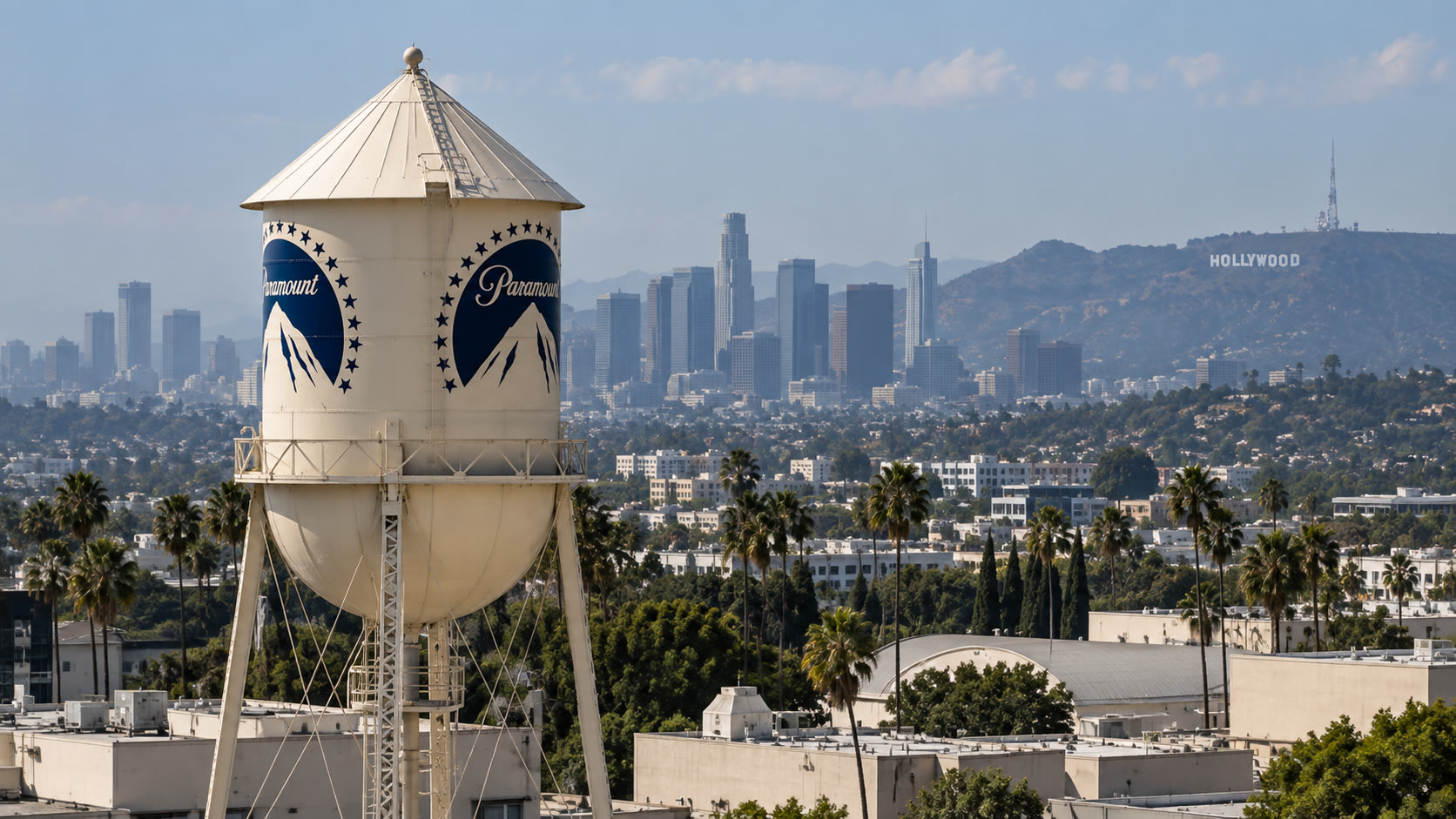
Paramount x Warner Brothers.Understand the money and machinery behind media's biggest deal in 25 years.
Paramount has agreed to acquire Warner Bros. Discovery in a transaction that values Warner's shares at about $81 billion and the overall business at roughly $110 billion, including net debt.
Eligible Warner shareholders would receive $31 in cash for each share they own.
The distinction between those numbers matters.
The approximately $110 billion enterprise value is not a $110 billion payment to shareholders. It reflects the value of Warner's equity together with its net debt.
To complete the acquisition, Paramount has to assemble tens of billions of dollars from different sources.
Some of the money will come from equity investors putting capital into Paramount in exchange for ownership.
Some will come from lenders providing money that Paramount will have to repay.
And some of the financing is temporary: money committed so Paramount can complete the acquisition while longer-term financing is put in place.
Paramount originally announced approximately $47 billion of new equity financing, backed by the Ellison family and RedBird Capital Partners, alongside a large package of committed debt financing.
A smaller payment already made as part of the transaction shows how this machinery can work.
Warner previously had an agreement with Netflix. When Warner abandoned that agreement to pursue the Paramount transaction, Netflix became entitled to a $2.8 billion termination payment.
Paramount funded that payment on Warner's behalf, using cash and $2.15 billion borrowed from an existing revolving credit facility—essentially a reusable corporate line of credit.
Paramount's filings say the money used for that payment is ultimately expected to be replaced with proceeds from the Ellison-affiliated equity investment.
That illustrates an important feature of large transactions:
The institution providing cash at one moment does not necessarily remain the institution financing it over the long term.
The same principle runs through the much larger acquisition.
Paramount has arranged equity commitments, bank financing, temporary bridge financing and longer-term debt. Some of the later financing is designed to replace earlier financing. And some institutions that initially arrange or commit money may ultimately transfer portions of that exposure to other investors.
As of September 28, the acquisition had not closed. Paramount was still raising acquisition financing, while a proposed settlement of a state antitrust challenge remained subject to court approval.
So the useful question underneath the $110 billion headline is not simply:
Who is paying?
It is:
Where does the money come from, what does each provider get in return, and who ultimately carries the risk?
Equity investors
provide ownership capital to Paramount
Lenders & debt investors
provide borrowed money to Paramount
Paramount
the buyer / borrower
Temporary financing
can be replaced by
Longer-term financing
The source of cash can change over time. A bank that provides or arranges financing first may not be the investor that ultimately holds the risk.
The easiest way to understand the deal is to stop thinking about it as one giant pile of money.
| Party | What they bring | What they receive | What they risk |
|---|---|---|---|
| Warner shareholders | Their Warner shares | Cash if the transaction closes | They give up future ownership upside once they sell |
| Equity investors | Ownership capital | An ownership interest and potential upside | Their investment can lose value |
| Lenders / debt investors | Borrowed money | Interest, fees and repayment | The borrower may struggle to repay them |
| Arrangers / syndicators | They organize and distribute financing | Fees | They may retain more exposure than intended if financing cannot be distributed as planned |
It is several different financial bargains happening at the same time.
Warner shareholders are the sellers. If the transaction closes, they give up their shares and receive cash.
Equity investors are putting money into Paramount in exchange for ownership. Their return is not a promised interest payment. If the combined company becomes more valuable, their investment can rise in value. If the business disappoints, that investment can lose value.
Lenders are making a different bargain. They provide borrowed money and expect interest, fees and eventually repayment of what they lent.
There is also another role that can be easy to miss: the institutions that arrange the financing.
A bank can help assemble a large loan without intending to keep the entire loan on its own balance sheet. It can bring additional lenders into the transaction or distribute pieces of the financing to other investors.
That means the institution whose name appears prominently when a deal is announced is not necessarily the institution that will ultimately carry every dollar of the risk.
The sellers want cash.
The equity investors want ownership upside.
The lenders want interest and repayment.
And some financial institutions are paid to help assemble and distribute the financing.
Same acquisition. Different financial bargains. Different risks.
Paramount's original equity package was approximately $47 billion: up to $46.7 billion from Ellison-affiliated investors and $250 million from RedBird.
Other investors later took allocations of that equity financing, including Saudi Arabia's Public Investment Fund, an investment vehicle associated with an Abu Dhabi sovereign wealth fund, an investment vehicle of the Qatar Investment Authority and a LionTree fund.
Paramount's filings say those allocations cover the equity commitments already made—they are not another $47 billion being added on top.
Think of it as an ownership-capital pool.
The investors contributing to that pool can change without necessarily changing the size of the pool itself.
Those investors are buying exposure to Paramount's future value.
If the acquisition produces stronger earnings, successful streaming businesses, valuable intellectual property and the expected cost savings, the equity could become more valuable.
If the combined company performs poorly or takes on more financial burden than its earnings can support, the equity can lose value.
That is the basic equity bargain: investors accept the risk of owning the business in exchange for the potential upside.
Paramount cannot fund an acquisition of this size with equity alone.
It also needs debt.
When the transaction was announced, the financing included a $54 billion committed bridge loan from Bank of America, Citi and Apollo-related financing sources.
A bridge loan is temporary financing.
Paramount may need the acquisition money on a particular date before every piece of its longer-term financing has been completed.
So lenders commit to make money available during that gap.
The bridge gets the company from:
We need the money to complete the acquisition
to:
We have arranged the financing we intend to keep for longer.
If a bridge loan is actually drawn, the borrower owes real money.
"Temporary" describes the intended life of the financing, not whether it has to be repaid.
This distinction matters because acquisition announcements contain enormous numbers.
If a lender commits $10 billion, that does not necessarily mean $10 billion has already been borrowed.
A commitment means the lender has agreed to make financing available if the conditions in the agreement are satisfied.
A draw occurs when the borrower actually takes the money.
The same principle applies to a revolving credit facility.
A company can have access to billions of dollars of borrowing capacity without having borrowed all of it.
That is why adding every number from every financing announcement together can produce a misleading picture of what Paramount actually owes.
Paramount has been moving from temporary commitments toward longer-term financing.
In April, it completed syndication of its bridge facility among 18 lenders and arranged $5 billion of term loans, reducing the bridge commitment from $54 billion to $49 billion.
On September 24, Paramount launched syndication of another proposed $7.5 billion Term B loan.
Then, on September 28, it launched approximately $44.4 billion of secured bond offerings, consisting of first-lien and second-lien debt.
Paramount said the proceeds, together with cash, previously announced loans and equity financing, are intended to help fund the Warner acquisition and repay certain existing debt.
The offerings remain subject to market and other conditions.
This is an important place not to misread the numbers.
You should not simply add the original $54 billion bridge, the later $49 billion bridge, the $7.5 billion loan and the $44.4 billion bond offering together and conclude that Paramount is accumulating every amount simultaneously.
Much of what we are watching is replacement financing.
One form of financing is being reduced or replaced by another.
The financing changes form.
The obligation does not disappear.
And the investors ultimately holding that obligation can change.
Paramount's latest financing introduces another piece of financial language: first lien and second lien.
Both describe where lenders or bondholders stand in relation to specified collateral.
A first-lien creditor generally has a higher-priority claim on that collateral than a second-lien creditor if the borrower cannot meet its obligations.
That matters because lenders care not only about whether they are owed money, but also about where they stand relative to other creditors if something goes wrong.
It does not mean a lender automatically owns Warner Bros., a movie studio or every asset of the company.
The actual collateral and protections are defined in the financing documents.
But the hierarchy illustrates an important point:
Not all debt carries the same risk simply because all of it is called debt.
Lenders are compensated for providing capital and accepting credit risk.
An equity investor hopes the company becomes significantly more valuable.
A lender makes a different calculation.
The lender asks whether the interest, fees and contractual protections are sufficient compensation for the risk that the borrower may have difficulty repaying the money.
That is why investors can participate in the same acquisition while making very different investment decisions.
The equity investor asks:
How valuable could this company become?
The lender asks:
How confident am I that this company can pay me back?
Those questions are connected.
They are not the same.
This is another part of acquisition finance that headlines often obscure.
A bank can agree to help finance an acquisition without wanting to hold the entire exposure for years.
It can bring other lenders into the transaction.
That process is called syndication.
Portions of a loan can ultimately be held by banks, insurance companies, credit funds and other institutional investors.
So there can be several different institutions involved in what casually gets described as "the lender":
the institution that arranges the financing;
the institution that initially commits the money;
and the investor that ultimately holds the loan.
Sometimes they are the same institution.
Sometimes they are not.
This is why asking which bank is "paying for the deal" can produce an incomplete answer.
A more useful question is:
Who ultimately owns the exposure?
Buying Warner does not make Warner's existing debt disappear.
Paramount has offered to pay cash for some Warner-related notes and exchange others for newly issued Paramount debt.
On September 28, Paramount extended and modified those offers.
For an investor, the distinction matters.
A creditor who accepts cash and is paid exits that claim.
A creditor who exchanges an old Warner obligation for a new Paramount security remains a lender, but now holds a different financial claim.
The borrower or issuer can change.
The collateral can change.
Other contractual protections can change.
The investor remains exposed, but through a different instrument.
Once again, the obligation has not simply vanished.
The financial claim has changed form.
The purchase price tells us how large the acquisition is.
The financing tells us who remains exposed after the transaction takes place.
If Warner shareholders receive cash at closing, they give up their shares and largely exit the ownership risk associated with Warner.
Paramount's new equity investors do the opposite.
They put capital at risk because they expect the combined company ultimately to be worth more.
Lenders occupy a different position.
They have contractual claims for interest and repayment.
Some also have collateral and other protections.
But lending is not risk-free.
If the combined company cannot generate enough cash to meet its obligations, creditors can suffer losses too.
Where each creditor sits in the capital structure can affect how much protection it has.
Borrowed money comes with contracts.
Those contracts can restrict additional borrowing, asset sales, distributions to shareholders and other financial decisions.
These restrictions are called covenants.
Covenants do not mean lenders run the company.
Shareholders and their voting rights still determine corporate control.
But lenders can place boundaries around what a company is permitted to do financially while their money is outstanding.
So the financing affects more than the day Paramount pays Warner shareholders.
It can influence corporate decisions for years afterward.
The capital structure is sophisticated.
The underlying economics are more straightforward.
The combined company ultimately has to generate cash.
Subscribers pay for streaming services.
Advertisers buy advertising.
Distributors pay for programming.
Consumers buy movie tickets.
Other companies pay to license content.
From that revenue, the company has to pay employees, fund productions, operate its technology and other businesses, invest for the future—and meet its financial obligations.
Paramount says it expects more than $6 billion of synergies from combining the businesses.
Those savings matter because a more profitable company has more capacity to service debt and create value for shareholders.
But expected savings are not the same as cash already produced.
They have to be achieved.
A transaction can therefore be financed successfully at closing and still depend on something much less exotic afterward:
the business has to perform.
Go back to the $2.8 billion Netflix payment.
Netflix needed to be paid.
Paramount supplied the money.
Part of that money initially came from Paramount's revolving credit facility.
The financing agreements provide for equity capital ultimately to fund the expense.
Those are different stages of the same transaction.
And each stage can produce a different answer to the question:
Who paid?
The same thing happens on a much larger scale with the acquisition itself.
Bridge lenders can provide temporary financing.
Longer-term loans and bonds can replace that financing.
Banks can arrange loans and distribute pieces to other institutions.
Existing Warner creditors can take cash and leave, or exchange their old claims for new ones.
Equity investors can provide ownership capital while lenders provide debt alongside them.
The financial machinery separates two things that sound as though they should happen at the same time:
when money is needed
and
who ultimately wants to hold the risk.
That is what a bridge loan really provides: time.
It allows Paramount to know that financing can be available for the acquisition before every piece of permanent financing has been completed.
But the bridge does not make the financing problem disappear.
It moves the problem forward.
Paramount still has to place longer-term debt with investors willing to accept the terms.
Those investors still have to decide whether the expected return compensates them for the risk.
And eventually, the combined Paramount-Warner business has to generate enough cash to support the obligations sitting above it.
So when the next giant acquisition is announced, the useful questions are not simply:
How much is the deal worth?
They are:
Who is putting up the ownership capital?
Who is lending the money?
Which financing is temporary?
What is supposed to replace it?
Who gets paid and leaves?
Who stays invested?
And after all the arranging, syndicating and refinancing is finished, who is still holding the risk?
The $110 billion headline tells you the scale of the Paramount-Warner deal.
Following the capital tells you how the deal can actually happen—and who is relying on what to get their money back.
Every financing figure in this article is taken from a filed document or an official release, and each is identified by the date of the filing that establishes it. The information set is current through September 28, 2026. Commitments, actual borrowings and proposed or launched replacement financing are recorded as different things and are never added together: a bridge commitment reduced when longer-term facilities were signed, and a syndication launched in September is not a loan outstanding alongside the bridge it is intended to replace. Warner's own borrowing is a separate borrower's transaction and is set apart from Paramount's acquisition financing. Where an arrangement is signed but conditional on closing, the article says so rather than describing it as funded. Court approval of the states' settlement was unresolved at the cutoff, and the acquisition is described as proposed throughout.
Your turn
Was something unclear? Did we miss an important angle? Is there a question you’d like us to answer next?
We’d love to hear from you.
Share your thoughtsor write to hello@inlayterms.com
Spotted a factual error? Write to corrections@inlayterms.com.